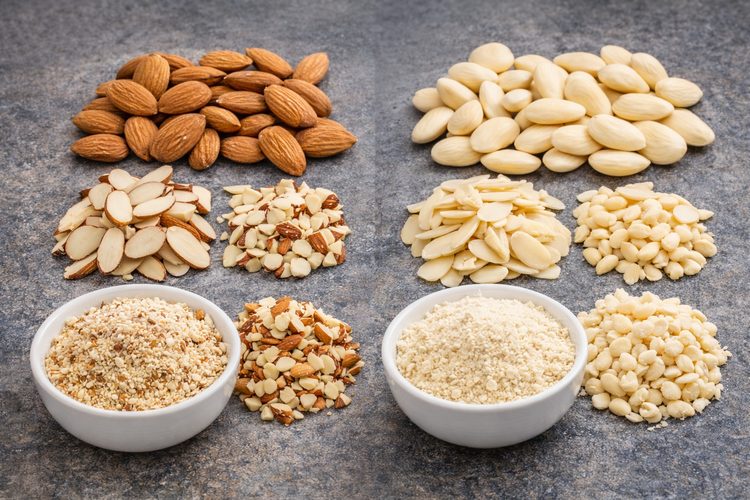
Choosing between natural and blanched almond products is not a cosmetic decision alone. In real industrial buying, it changes how the ingredient behaves in the application, how the finished product looks on shelf, how the line is specified, and how procurement compares suppliers. Two quotes can look close in nominal price but still represent very different commercial value once process fit, visual tolerance, packaging, and waste risk are considered.
For buyer buyers, the central question is simple: does the end use benefit from the almond skin being present, or does the application work better with the skin removed? That one choice affects whole kernels, sliced and slivered cuts, diced products, meal, flour, paste, butter, and premium retail or export presentations.
Core buying principle: natural versus blanched should be selected at the same time as format, particle size, processing state, packaging style, destination market, and shipment rhythm. A specification works best when those decisions are made together rather than one by one.
What “natural” and “blanched” mean in practical sourcing terms
Natural almonds are skin-on almonds. The brown outer skin remains intact, which means the kernel keeps its natural visual identity, its slightly darker finished appearance, and some of the flavor and texture notes associated with the skin. Natural almonds may be sold as whole kernels, sliced, slivered, diced, meal, flour, butter, or other further-processed forms.
Blanched almonds are almonds with the skin removed. The removal step creates a lighter, cleaner-looking kernel and a more uniform base for downstream cutting, milling, or paste production. Blanched almonds may be supplied whole, slivered, sliced, split, diced, meal, flour, paste, or specialty confectionery and bakery formats.
From a procurement standpoint, this is usually less about “better” and more about fit-for-purpose. Natural almonds are often commercially attractive when skin presence is acceptable or desirable. Blanched almonds become more valuable when lighter color, visual uniformity, reduced specking, or a smoother premium presentation matters to the finished product.
Why this decision matters in real buying programs
Natural versus blanched affects more than ingredient description on a purchase order. It can influence:
- Color outcome: whether the almond shows as brown skin-on pieces or a light cream-colored ingredient in the final product.
- Flavor profile: whether the application tolerates or benefits from a slightly more rustic, skin-associated note versus a cleaner and milder nut profile.
- Texture and mouthfeel: especially in finely milled ingredients, fillings, creams, and smooth spreads.
- Particle appearance: whether brown flecks are acceptable in flour, meal, paste, batter, icing, or dairy-alternative systems.
- Roasting and coating presentation: particularly in snack, confectionery, and foodservice topping programs.
- Factory workflow: whether the buyer wants a ready-to-use blanched input or plans to manage additional processing internally.
- Total delivered cost: including raw material conversion, sorting, waste exposure, production efficiency, and complaint risk.
Side-by-side comparison: natural vs. blanched almonds
| Decision Area | Natural Almond Products | Blanched Almond Products | Why Buyers Care |
|---|---|---|---|
| Visual appearance | Brown skin remains visible | Light cream-colored appearance | Changes finished product look, especially in premium bakery, confectionery, and dairy-style systems |
| Flavor impression | Often read as more natural, robust, or rustic | Typically cleaner and milder in presentation | Important where almond flavor should be neutral, delicate, or visually refined |
| Milling result | Meal or flour may show darker specking from skin | Meal or flour is more uniform in color | Critical for macarons, marzipan, fillings, pale bakery systems, and smooth premium pastes |
| Retail and foodservice look | Good for “natural” or artisan visual positioning | Good for clean, elegant, premium presentation | Merchandising and menu perception can justify a different ingredient route |
| Application tolerance | Works where skin is acceptable or desirable | Preferred where skin flecks are visually disruptive | Helps avoid mismatch between ingredient spec and customer expectation |
| Processing requirement | Less converted state at purchase | Additional processor intervention already completed | Determines whether the buyer is paying for convenience, visual control, and reduced line burden |
| Relative cost position | Often commercially attractive where skin presence is acceptable | Usually carries a premium due to extra processing and handling | Nominal price must be weighed against downstream savings and fit |
| Common best-fit uses | Snack mixes, granola, cereal, bakery inclusions, skin-on meal or butter | Macarons, marzipan, confectionery, premium toppings, light-colored flour and paste systems | Application fit is usually the fastest way to narrow the correct specification |
Where natural almonds usually make the most sense
Natural almonds often fit programs where the brown skin supports the intended visual or where the application does not penalize skin presence. Buyers may deliberately choose natural formats when they want a recognizable whole-food appearance or when price discipline matters more than highly refined visual uniformity.
Common use cases include:
- Snack mixes and trail blends where skin-on whole kernels reinforce a natural, less processed product image.
- Granola and cereal where color variation is acceptable and visual contrast may even help the bowl or bar look more artisanal.
- Bakery inclusions such as chopped or diced almonds in cookies, breads, granola bars, muffins, and rustic pastries.
- Chocolate enrobed or coated nuts where internal skin presence may not matter once coated.
- Nut butter or meal programs that intentionally accept a darker appearance or stronger visual identity.
- Value-sensitive industrial production where the finished system does not justify paying for blanching.
In many of these categories, a buyer is not only purchasing an ingredient but also selecting a product story. Natural almonds can reinforce “traditional,” “wholesome,” or “minimally transformed” positioning when the rest of the product concept supports that direction.
Where blanched almonds usually justify the premium
Blanched almonds are typically chosen when appearance control is part of the quality standard, not an optional feature. In those cases, the lighter color and cleaner kernel surface are not merely aesthetic improvements; they are part of finished-product consistency and customer acceptance.
Typical blanched use cases include:
- Macarons, marzipan, frangipane, and almond-based pastry components where a pale and consistent flour or paste is expected.
- Premium confectionery including dragees, nougat, praline-style components, and enrobed products where appearance must stay clean.
- Sliced or slivered topping programs for pastries, desserts, hotel buffet applications, and foodservice menu finishing.
- Ice cream and frozen dessert inclusions where light visual contrast may be preferred over brown skin fragments.
- Plant-based dairy and creamy bases where skin-free raw material can help produce a lighter visual result and more refined suspension system after processing.
- Fine bakery and filling systems where visible skin flecking would be read as a quality defect rather than a natural trait.
In these categories, paying more for a blanched specification may reduce rework, internal quality debate, finished-product variability, and customer complaints tied to appearance mismatch.
How the choice changes by product form
1) Whole kernels
For whole almonds, the natural-versus-blanched decision is very visible. Natural whole kernels communicate a skin-on, natural style. Blanched whole kernels look more refined and are often selected for confectionery, high-end bakery, or applications where cream-colored appearance is preferred. Procurement teams should define whether the requirement is simply “whole almonds” or more precisely “whole natural kernels” or “whole blanched kernels,” because that distinction changes both pricing and fit.
2) Slices, slivers, and splits
Sliced and slivered almonds are among the most specification-sensitive forms because they are often used as visible toppings. A natural slice or sliver may be perfectly acceptable in cereal, snack, or rustic bakery programs. A blanched slice or sliver is often preferred when topping color must remain clean and premium, especially on pastries, cakes, desserts, and retail bakery items. Buyers should also define thickness range, breakage expectations, and whether appearance consistency matters more than absolute low cost.
3) Diced and chopped almonds
For diced almonds, the application decides how much skin matters. In cereal bars, inclusions, clusters, and coated snack systems, natural diced almonds may perform well and support cost efficiency. In pale fillings, white chocolate systems, premium nougat, and visually clean dessert applications, blanched diced almonds often fit better. The buyer should define not only natural versus blanched, but also cut size, acceptable fines, and breakage distribution.
4) Meal and flour
This is often where the difference becomes commercially decisive. Natural almond meal or flour will typically present visible darker flecks from the skin. That can be appropriate for rustic bakery mixes, gluten-free muffins, bars, crusts, or applications where a less uniform look is acceptable. Blanched almond meal or flour is generally selected when a lighter crumb, smoother visual presentation, or cleaner pastry standard is needed. Buyers should never request “almond flour” without clarifying whether natural or blanched is required, because those are not interchangeable in many bakery and confectionery systems.
5) Butter, paste, and creamy systems
For almond butter, paste, and creamy processed systems, skin content affects color and visual cleanliness. Natural butter or paste may look darker and can support a more “whole almond” presentation. Blanched paste often suits premium bakery, confectionery, fillings, and dairy-alternative programs where pale color and cleaner appearance are more important. When quoting these products, Atlas would also want to know target viscosity, grind style, oil separation tolerance, and whether the material is used as an ingredient or a finished retail base.
Specification points buyers should define before requesting quotes
In commercial practice, “natural vs. blanched” is only one line of the specification. To compare offers properly, buyers should build a request that includes the full operating context. Typical quote inputs include:
- Product form: whole, sliced, slivered, split, diced, meal, flour, butter, paste, or oil.
- Skin status: natural skin-on or blanched skin-off.
- Processing state: raw, pasteurized, dry roasted, oil roasted, seasoned, or further processed.
- Cut or particle size: especially important for diced almonds, meal, flour, and topping applications.
- Application: bakery, confectionery, snack, cereal, plant-based dairy, foodservice, retail pack, or industrial ingredient use.
- Visual expectations: tolerance for flecking, color variation, broken kernels, chips, fines, or skin remnants where applicable.
- Packaging style: bulk industrial, foodservice, retail-ready, private label, or export-oriented packs.
- Volume structure: sample, trial, launch volume, monthly call-off, or container program.
- Destination market: U.S. domestic or export destination, because documentation and pack style can change.
- Timeline: urgent spot need, forward contract window, or rolling replenishment program.
- Quality documentation: COA expectations, specification sheet, traceability, packing details, and any compliance documents required by the buyer.
Practical warning for procurement: requesting “almond flour” or “sliced almonds” without stating natural or blanched often creates avoidable quotation mismatch. The supplier may price one version while the production team expects the other.
How this topic shows up in real production and QA decisions
Procurement usually feels the pricing side first, but operations and QA experience the consequences later. A cheaper natural specification can become expensive if the finished application rejects visible flecks or if a premium customer expected a lighter visual. On the other hand, a blanched specification may be unnecessary over-engineering if the product is a dark cereal cluster, a mixed snack, or a coated application where skin presence is operationally irrelevant.
That is why strong buyers treat this as a cross-functional decision. Procurement, production, product development, and commercial teams should all agree on whether skin presence is a feature, a neutral factor, or a defect. When that answer is clear, the rest of the sourcing discussion becomes much easier.
Incoming QC checks for natural and blanched almond programs
Atlas encourages buyers to think about the receiving spec before the first shipment, not after. For natural and blanched almond ingredients, purchasing and QA teams commonly review:
- Lot identity and traceability against PO, specification sheet, and shipment documents.
- Product form confirmation to verify whole, sliced, slivered, diced, meal, or flour matches the order.
- Skin status confirmation to ensure the delivered product is natural or blanched as specified.
- Visual condition including color, cleanliness, obvious defects, unusual darkening, or appearance inconsistency.
- Breakage and fines level especially for whole, sliced, and slivered programs where presentation matters.
- Moisture and general condition in line with the buyer’s receiving standards and shelf-life plan.
- Odor and flavor check to confirm the lot is commercially sound for the intended application.
- Packaging integrity including liner condition, seal quality, label accuracy, lot coding, and pallet presentation.
- Documentation completeness such as COA, packing list, and any market-specific paperwork required by the program.
For more refined applications, QC teams may also review cut distribution, flour fineness, visual uniformity, or application-specific characteristics that matter to line performance. The more premium or appearance-sensitive the program, the more important it becomes to define those controls before launch.
Commercial planning: nominal price vs. total delivered cost
In trading, buyers sometimes focus too heavily on the line-item price difference between natural and blanched material. That comparison is incomplete. The better question is which option produces the lowest total delivered cost for the intended result.
Blanched material may cost more on paper because it reflects added processor handling and conversion. But that premium may still be commercially rational if it helps:
- avoid visual rejection in the finished product,
- reduce downstream sorting or handling at the buyer’s plant,
- improve presentation in premium retail or foodservice programs,
- create more uniform flour or paste for a controlled formulation,
- protect the buyer from launching with the wrong customer-facing appearance.
By contrast, natural material can be the stronger commercial choice when the application does not benefit from paying for blanching. In those cases, a natural spec may preserve acceptable functionality while improving cost position.
Export, packaging, and logistics considerations
Natural versus blanched also influences how a product is packed and commercialized. Export-oriented programs should define whether the almonds are supplied as industrial bulk ingredient, private-label component, foodservice item, or retail-ready consumer pack. That distinction affects palletization, carton style, liner format, coding detail, and destination-specific labeling expectations.
For domestic and export programs alike, Atlas generally wants clarity on:
- pack size and unit configuration,
- bulk versus finished packed presentation,
- trial volume versus recurring replenishment,
- shipment cadence and target ship windows,
- documentation expectations for the destination market,
- whether the customer is buying for manufacturing input, repacking, or direct distribution.
That matters because the right almond specification can still become the wrong commercial program if the pack style and logistics assumptions were never aligned with the actual route to market.
How Atlas would ask before quoting
Atlas uses this topic as a decision filter rather than a generic educational headline. Before quoting natural or blanched almond products, we would typically ask:
- What exact product form is required?
- Is the specification natural skin-on or blanched skin-off?
- What is the real end use: topping, inclusion, flour base, paste, butter, or further conversion?
- Does finished-product appearance make brown flecking acceptable or unacceptable?
- Is the requirement for industrial bulk, foodservice, retail-ready, private label, or export supply?
- What is the expected volume path: sample, validation run, launch, or repeat container program?
- What is the destination market and shipping window?
- Are there specific packaging, documentation, or receiving controls the buyer wants reflected in the offer?
These questions are not administrative. They are what help turn a broad ingredient inquiry into a quote that is actually usable by the buying team.
Buying brief template: what a strong inquiry looks like
A practical quote request for this topic might read like this:
Example brief: “Please quote California blanched almond flour for premium gluten-free bakery use. Fine grind. Light and uniform appearance required. Initial pallet trial followed by monthly replenishment if approved. Packed for industrial handling. Destination: EU. Please include lead-time guidance, pack details, and documents typically available for export review.”
Or, for a different program:
Alternative brief: “Please quote natural diced almonds for granola and cereal manufacturing. Skin-on appearance acceptable. Cost efficiency is important, but cut consistency should support automated inclusion. Monthly usage estimate available. U.S. domestic program. Please advise pack options, lead time, and any recommended specification notes for cereal production.”
Buyer planning note
Natural and blanched almond products should not be treated as interchangeable defaults. They sit in different visual, functional, and commercial positions depending on the end use. The right choice depends on whether the buyer is optimizing for artisan appearance, light color, premium presentation, milling uniformity, process simplicity, or total program economics.
Atlas Global Trading Co. uses topics like this to move conversations from broad category interest into specification-minded quotation. If you are evaluating California almond supply, send the real application, format, pack style, volume path, and destination market through the quote form so the next commercial step is grounded in an actual buying requirement.
Need help sourcing natural or blanched almond ingredients?
Use the contact form to convert this research topic into a practical quote request with the right format, quality language, packaging assumptions, and commercial timing.
- Specify natural or blanched clearly
- Add exact format, cut, or grind requirement
- Include application, destination, and target volume
Frequently Asked Questions
When should a buyer choose natural almonds instead of blanched almonds?
Natural almonds are often the better choice when skin-on appearance is acceptable, a more rustic or natural look is desirable, and the application does not require a light, uniform finish. Common examples include snack mixes, granola, cereal, certain bakery inclusions, and some skin-on meal or butter programs where the product concept does not penalize visible skin.
When does a blanched almond specification usually justify the premium?
Blanched almonds usually justify the premium when finished-product appearance, flour uniformity, or a cleaner premium presentation matters. That is especially true in macarons, marzipan, frangipane, confectionery, premium toppings, pale fillings, frozen dessert inclusions, and some plant-based dairy applications where skin flecking would be commercially undesirable.
What details should be included in a quote request for natural or blanched almond ingredients?
A strong quote request should identify format, natural or blanched status, processing state, cut or particle size, application, pack style, destination market, trial or monthly volume, target ship timing, and any important receiving or documentation requirements. That gives the supplier enough context to quote the right product rather than a generic almond item.
Can Atlas support both U.S. and export discussions for natural and blanched almond products?
Yes. The same specification logic applies to domestic and export programs, but packaging, labeling, pallet format, shipment planning, and document expectations can vary by market. Atlas structures quote discussions around those commercial realities instead of treating all destinations the same.