Fine, medium or coarse meal?
Particle size affects coating appearance, pickup, adhesion, crunch and waste on line.
Buyer guidance on cashew meal selection, coating performance, crumb structure, savory application development and commercial sourcing planning.
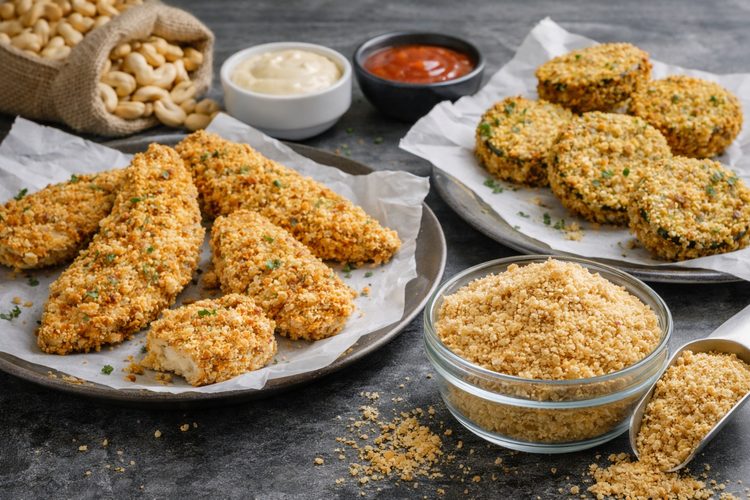
Cashew meal is one of the more interesting specialty ingredients in savory coating systems because it can change both the technical behavior and the market position of the finished product. It does not simply replace a standard crumb. In many applications it adds a richer bite, a nuttier toasted note, a more premium appearance and a different frying or baking response than conventional breadings or low-cost particulate systems. That is why the buying conversation should not start with price alone. It should start with what the coating is supposed to achieve on line and in the finished product.
For Atlas Global Trading Co., this topic sits between ingredient specification and commercial product design. Buyers using cashew meal in savory coatings are often building a product that needs to signal premium quality, cleaner formulation logic, culinary differentiation or a more upscale eating experience. Examples can include coated proteins, prepared foods, premium appetizers, savory bakery applications, crusted vegetable items, foodservice concepts and frozen or chilled products where texture and visual identity both matter.
In those projects, cashew meal is not chosen just because it is a nut-derived particulate. It is chosen because it can deliver a more refined crumb texture, a warmer and more natural nut tone, and a distinct flavor contribution that supports premium positioning. But these advantages only hold when the meal specification, coating process, pack style and volume planning are aligned. A fine meal that works in one dry coating system may not be suitable in a coarse crust application. A roasted meal may deliver the right note in one formulation and an overly dark or oily profile in another. The technical brief has to match the commercial intent.
In real purchasing discussions, buyers usually reach cashew meal coatings when they are looking for one of four outcomes: better texture, more visual distinction, a stronger premium story or a coating system that feels more culinary than industrial. That can happen in frozen prepared foods, refrigerated meal components, foodservice appetizers, plant-based items, coated cheeses, poultry products, seafood formats or upscale snack applications.
The immediate question is rarely “Can we buy cashew meal?” The real question is usually closer to “What kind of cashew meal should we use so the coating adheres properly, holds through thermal processing, gives the right crunch and still makes commercial sense?” That is where the technical and commercial details start to matter. Buyers typically compare meal versus finer flour, raw versus roasted input, and cashew-based particulate versus other nut or crumb systems. The right answer depends on adhesion method, coating thickness, finished appearance, line stress, thermal process and total delivered cost.
Another common real-world issue is whether the cashew meal is intended to be the full crumb system or only part of a blend. In some applications, buyers use cashew meal as a premium fraction inside a broader savory coating blend. In others, it acts as the main visual and textural element. That difference materially affects how the product should be quoted and specified, because inclusion rate, particle tolerance, pack size and cost structure all change.
Cashew meal can contribute more than flavor. Functionally, it can add particulate structure, a nut-forward bite, a warmer golden appearance and a less uniform, more handcrafted visual effect than highly standardized crumb systems. Depending on granulation, it may create a delicate crust or a more substantial textured finish. In some premium applications, that irregularity is a positive because it makes the finished item look less manufactured and more culinary.
At the same time, cashew meal has different behavior from conventional bread crumbs. Because it is nut-derived, oil behavior and particulate integrity matter. Finer meal may absorb or carry seasonings differently. Coarser meal may create more visual impact but can require stronger adhesion support or more careful processing. Roasted meal may intensify flavor and color, while raw or lightly processed meal may allow the product developer to build flavor later through seasoning or downstream thermal processing.
This is why buyers should define not only the ingredient name but the actual role on line. Is the meal there to create a crust? To carry savory seasoning? To add premium visual cues? To help support a gluten-free or specialty coating concept? To create a softer or richer bite than a standard crumb? Once that role is clear, specification becomes much easier.
Particle size is one of the most important technical variables in cashew meal coatings. A fine meal can behave closer to a dense flour-like fraction, producing a tighter and more even coating layer. A medium meal may create a more visible crumb texture while still coating relatively uniformly. A coarse meal can create the most dramatic visual and bite effect, but may require stronger bind systems and more careful line control to prevent fallout or uneven distribution.
In practical terms, buyers should not ask only for “cashew meal” if the application is sensitive. They should define the expected crumb character. Is the target smooth and even, lightly pebbled, visibly chunky or intentionally rustic? Is the coating being applied in a dry breading sequence, a slurry system, a batter-then-crumb system or a pressed crust format? The correct size range often depends on that answer.
Commercially, tighter particle specifications can improve consistency, but they may also narrow supply flexibility or add processing cost depending on how the meal is produced and screened. That does not mean the buyer should avoid precision. It means the specification should reflect what is actually necessary for the application. In many projects, a realistic range is more useful than an overly narrow request that does not materially improve finished product performance.
Another major choice is whether the cashew meal should be raw/natural, pasteurized or roasted before use in the coating system. Roasted meal is often attractive because it brings immediate nut flavor and a warmer finished tone. In upscale savory products, that can help build a more finished and indulgent sensory profile. Roasted meal may also better support products where the coating is not exposed to a long or intense secondary cooking step.
Raw or lightly processed meal can be useful when the product will go through a significant thermal process later, or when the buyer wants more flexibility in how color and flavor develop in the final application. In some systems, using a rawer input can reduce the risk of overdeveloped flavor or excessive darkening. The better choice depends on whether the coating is expected to arrive on shelf fully finished in flavor or continue developing through frying, baking or reheating.
Atlas would typically encourage buyers to define whether the application is fried, baked, air-fried, par-cooked, frozen, chilled or shelf-stable. That processing logic affects whether raw or roasted meal is the better fit. A coating ingredient that looks right in a benchtop trial may behave differently once scaled into a thermal and packaging system.
Savory coating systems live or die on line performance. Even if the flavor is strong and the crumb looks premium, the program can become commercially difficult if the meal does not adhere well, breaks excessively, creates high fallout or behaves inconsistently in high-throughput production. Cashew meal can work very well, but it should be selected with the coating sequence in mind.
Buyers should consider how the meal enters the system. Is it applied after flour and batter? Is it part of a dry seasoning blend? Is it used as an external crust on a formed item? Is it mixed with other crumbs, starches or particulates? These details matter because particle size, natural oil content and roast condition can all influence pickup and retention.
In some applications, a finer or more uniform meal improves adhesion and reduces waste. In others, a coarser fraction is worth the extra complexity because it creates the desired appearance and bite. The correct commercial choice is the one that balances premium outcome with realistic process efficiency. Excessive crumb loss, rework or variability can quickly erode the value of a premium ingredient if the system is not designed properly.
Cashew meal can contribute its own flavor identity, which is one reason it is attractive in premium savory systems. The note is typically rounder, softer and more buttery than harsher particulate bases. This makes it useful in herb coatings, savory spice blends, dairy-adjacent flavor profiles, premium crusts and culinary-style appetizer applications.
At the same time, the base flavor of the cashew meal should fit the seasoning design. A buyer using bold smoke or chili profiles may want the meal to support, not compete with, the seasoning. A more subtle savory herb or cheese-style system may depend on the meal contributing a meaningful background note. The stronger the desired flavor effect from the meal itself, the more important roast style and freshness become.
Commercially, this means that cashew meal is often best used where its flavor can be perceived as part of the value story. If the system is so heavily seasoned that the cashew note disappears entirely, the buyer should at least be sure the texture and positioning advantages still justify the premium ingredient choice.
Typical use cases for cashews on this website include snacks, bakery, confectionery, plant-based dairy and spreads. In this topic, the product brief should specify the savory application clearly, such as coated protein, premium appetizer, crusted vegetable product, prepared food component or specialty crumb system.
For cashew meal coating programs, Atlas would normally ask buyers to define five practical inputs early: target meal format, end application, pack style, destination market and volume rhythm. For this topic, however, the brief is stronger when it includes additional technical detail. That detail often includes desired particle size range, raw versus roasted preference, target appearance, application method, thermal process, tolerance for fines, and whether the meal is used alone or in a multi-component blend.
Atlas would also ask how the product needs to perform in the finished state. Does the coating need to remain crisp after bake-off or reheating? Is the crust supposed to look coarse and artisanal or even and controlled? Will the finished item be frozen, chilled or sold immediately in foodservice? Is the program being built for industrial manufacturing, retail-ready packaging, foodservice supply or private label? These questions change the specification and the commercial route.
Another key point is packaging. Coating ingredients often move in industrial pack formats, but the correct pack still depends on how the customer uses the material. A plant with frequent smaller runs may prefer a different pack size than a high-throughput line running long campaigns. If the meal is exposure-sensitive or the customer wants tighter storage control after opening, that should be reflected in the pack discussion as well.
Commercially, savory coating programs usually develop in stages. The first stage is often a benchtop or pilot trial where the buyer is evaluating particle size, adhesion and flavor interaction. The second is a validation run under realistic processing conditions. The third is launch volume, followed by repeat replenishment. Atlas uses this logic because the specification that works in development is not always the same one that performs best in regular production and commercial distribution.
From a trade standpoint, the best programs are built around repeatability. That means realistic pack sizes, clear documentation, stable meal specification and a supply structure that can support continuity. If the meal is part of a premium branded or private label claim, consistency becomes even more important because visual and sensory shifts are more noticeable in premium products than in commodity-style applications.
When relevant, the brief should also mention whether the program is industrial bulk, foodservice, retail-ready, private label or export-oriented. Even when the meal itself is an industrial ingredient, the end channel changes expectations around specification discipline, documentation and timing. Export programs in particular may require more careful shelf-life and packaging consideration because of longer transit and broader climate exposure.
Buyers do not usually consider cashew meal in a vacuum. They compare it with bread crumbs, cracker crumbs, seed-based coatings, other nut meals and multi-ingredient crumb blends. Cashew meal generally earns its place when the product developer wants one or more of the following: a richer and more premium texture, a distinct nut identity, a warmer color tone, a more upscale label story or a specialty crumb structure that differentiates the product from standard breaded offerings.
The comparison should therefore focus on the actual product goal. If the objective is lowest coating cost, cashew meal may not be the logical first choice. But if the product needs to justify a premium position, create a culinary crust or fit a more distinctive formulation story, it can be very effective. The right decision comes from balancing product value, pickup rate, process efficiency and total delivered cost rather than comparing ingredient price per kilogram alone.
Because cashew meal is a processed nut fraction, buyers should also consider storage and handling. Particle size, roast condition and natural oil behavior can all influence how the product holds in warehouse and on line. If the customer is using the meal slowly after opening, pack size and reseal discipline may matter. If the product will move through warm conditions or long dwell times, oxidation and flavor stability should be considered as part of the quote request.
These points are especially important in premium savory applications, where the cashew contribution is expected to be noticeable. Texture and flavor drift can undermine the value of the finished item if storage discipline is weak. That is why Atlas encourages customers to think about the full route from ingredient receipt to line use, not just the purchase moment.
Atlas Global Trading Co. uses topics like this to move conversations from broad interest to a specification-minded inquiry. If you are evaluating cashew meal for savory coatings or crumb systems, share the target particle profile, process style, intended application, pack format and estimated volume so the next step can be grounded in a real commercial need.
In many cases, the strongest outcome comes from matching the meal specification to the exact coating role rather than treating all cashew meal as interchangeable. Particle size, roast state, adhesion behavior, pack configuration and destination market all influence the right sourcing route. Atlas works from that logic to help buyers move from product concept to a more practical California-based supply and processing discussion.
Cashew meal coating programs usually succeed when the buyer defines the crumb role, processing route and finished product expectation before asking for a price.
Particle size affects coating appearance, pickup, adhesion, crunch and waste on line.
The right state depends on whether flavor should be built into the ingredient or developed later during thermal processing.
Some buyers use cashew meal as the main coating fraction, while others use it as a premium inclusion inside a broader crumb blend.
The most visually striking meal may not always be the easiest one to run. The right commercial choice balances both.
Downstream format changes how crispness, adhesion and pack style should be evaluated.
If the coating becomes part of the brand story, consistency and specification discipline usually matter more.
Use the contact form to turn your coating or crumb concept into a practical quote request for Atlas and its California processing partners.
The main takeaway is that cashew meal performs best in savory coating systems when particle size, oil behavior, adhesion method, process temperature and finished pack format are specified together.
Cashew meal can add premium flavor, warmer color, richer bite and a more distinctive coating identity than conventional crumb systems, especially in upscale savory applications.
Buyers should specify particle size range, roast state, moisture expectations, visual consistency, application method, packaging style, allergen handling requirements and expected throughput.
Yes. The logic applies to both domestic and export savory coating programs, although packaging, labeling, documents and shipment timing can vary by destination and channel.