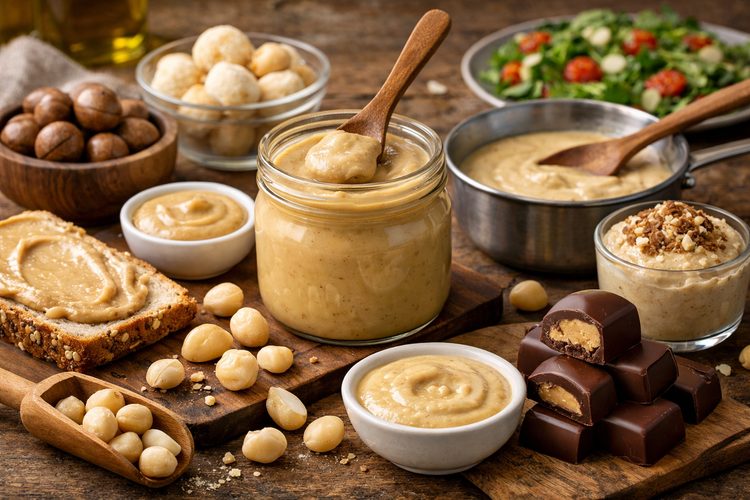
Macadamia butter sits at the intersection of premium flavor and functional fat system design. In spreads, sauces and formulated products, it is rarely used only as a flavor ingredient. It contributes structure, mouthfeel, emulsification behavior and perceived product quality. For industrial buyers, this means specification needs to go beyond “macadamia butter” and focus on how the ingredient performs in a system. The strongest commercial outcomes usually come from aligning grind, viscosity, oil behavior, application and packaging before sourcing decisions are made.
from a buyer's perspective, macadamia butter is not a single product but a range of possible solutions. The correct version depends on whether the product must spread, pour, emulsify, suspend, coat or blend. A premium retail spread, a savory sauce, a dessert base or a confectionery filling all require different functional behavior. The supplier conversation becomes more effective when these roles are clearly defined.
Why macadamia butter is used in premium formulations
Macadamia butter is valued for its naturally high fat content, smooth texture potential and mild, buttery flavor profile. Compared with other nut systems, it can deliver a softer, creamier mouthfeel without aggressive bitterness. This makes it particularly suitable for premium positioning across both sweet and savory categories.
Technically, macadamia butter can act as a fat carrier, texture builder and flavor base. It integrates well into emulsified systems and can contribute to viscosity and body without requiring excessive stabilizer input. In high-end formulations, it is often used to elevate perceived quality while maintaining relatively simple ingredient lists.
Application insight: macadamia butter is often chosen not only for taste, but because it can improve texture and system stability in premium formulations.
How this topic shows up in real buying decisions
Buyers evaluating macadamia butter for spreads, sauces and formulations typically compare several variables at once: grind definition, viscosity, oil separation behavior, roast level and packaging. The same butter may work well in one application and fail in another simply because the functional expectations differ.
For example, a spread program may prioritize spoonability and visual stability, while a sauce application may prioritize flow and blendability. A confectionery formulation may require precise deposition and fat interaction, while a plant-based dairy system may focus on emulsification and mouthfeel. These differences are why application-specific specification is critical.
Macadamia butter in spreads
In spread applications, macadamia butter is typically positioned as a premium alternative to more common nut butters. The key specification drivers include smoothness, spreadability, oil separation behavior and flavor balance.
A highly refined grind is often preferred for a smooth, luxurious mouthfeel. However, some brands may intentionally allow slight texture variation to signal a more natural product. Oil behavior becomes particularly important in retail spreads because visible separation affects consumer perception. Buyers must decide whether a natural presentation is acceptable or whether tighter visual consistency is required.
From a commercial standpoint, spreads often require retail-ready packaging, private label flexibility and consistent supply for repeat replenishment. This means the butter specification must be stable over time, not just optimized for a single production run.
Macadamia butter in sauces and savory systems
In sauces and savory applications, macadamia butter functions as both a flavor carrier and a structural component. It can contribute creaminess, help emulsify oil and water phases and provide a smooth base for spices, acids and other ingredients.
Here, viscosity and flow behavior become more important than visual appearance. The butter must integrate cleanly without clumping, and it should remain stable under mixing, heating and cooling conditions. Buyers often need to consider whether the butter will be used cold, heated or combined with other fats and liquids.
Macadamia butter can also help reduce reliance on dairy in certain formulations, making it attractive for plant-based or alternative products. In such cases, grind smoothness and emulsification behavior are critical to achieving a consistent final texture.
Macadamia butter in premium formulations
Premium formulations include confectionery fillings, dessert bases, bakery systems and functional blends. In these applications, macadamia butter is often used to create a specific sensory experience while also contributing to structure and process performance.
For confectionery, the butter must interact correctly with sugar and chocolate systems, supporting smooth textures and controlled deposition. In bakery, it may influence moisture retention and crumb structure. In frozen desserts, it can enhance creaminess and reduce ice perception. Each use case requires a tailored specification.
The key takeaway is that macadamia butter is rarely a drop-in ingredient. It is part of a system, and its specification must reflect that system.
Grind, texture and emulsification behavior
Grind definition directly affects how macadamia butter performs. A fine grind supports smooth mouthfeel and easier emulsification, while a coarser grind may provide texture but can complicate processing. Buyers should specify whether they need a fully smooth butter or a controlled texture.
Emulsification behavior is particularly important in sauces and plant-based systems. Macadamia butter can help stabilize emulsions, but its effectiveness depends on grind and formulation context. Buyers should consider how the butter interacts with water phases, other fats and stabilizers.
Oil behavior and stability
Oil separation is a natural characteristic of many nut butters. In industrial applications, it may be manageable or even irrelevant if the product is mixed before use. In retail spreads, it can become a key quality parameter.
Buyers should define acceptable oil behavior early. This includes whether separation is acceptable, how the product will be handled and how long it must remain stable. These factors influence both product selection and packaging decisions.
Packaging and commercial considerations
Packaging for macadamia butter depends heavily on the application. Industrial users may prefer bulk formats for efficiency, while retail programs require consumer-ready packaging. Export programs may need additional consideration for transit stability and documentation.
Packaging also affects handling. A format that works well in one plant may not suit another. Buyers should consider how the product will be received, stored and used when defining pack requirements.
Commercial planning points
Macadamia butter programs typically develop through stages: trial, validation, launch and repeat supply. Each stage has different priorities. Trials focus on fit, validation on consistency, launch on efficiency and repeat supply on continuity.
From a sourcing perspective, the goal is to build a program that supports repeatability. This includes consistent specification, reliable packaging and a shipment cadence that aligns with production needs.
Commercial note: the most effective macadamia butter programs are built for repeatability, not one-off purchases.
What Atlas would ask before quoting
Atlas typically asks buyers to define application, grind, texture, oil behavior, packaging, destination and volume. These inputs allow for a more accurate and practical quotation.
- What is the intended application (spread, sauce, formulation)?
- What grind and texture are required?
- How should the product behave in terms of flow and stability?
- What packaging format is needed?
- What is the destination market and timeline?
- Is this a trial, launch or ongoing program?
Buyer planning note
Atlas Global Trading Co. uses these application-driven discussions to move from general interest to specification-based sourcing. Buyers evaluating macadamia butter programs are encouraged to share detailed requirements so the next step reflects a real commercial need.
Practical inquiry template
A strong inquiry typically includes:
- Application (spread, sauce, formulation)
- Grind and texture target
- Flow and oil behavior expectations
- Packaging format
- Volume and timing
- Destination market
This approach improves both technical alignment and commercial outcomes.
Need help sourcing macadamia butter?
Use the contact form to turn this application into a practical quote request tailored to your product.
- Define application and texture
- Add volume and timing
- Include destination and packaging
Frequently Asked Questions
What is the main buyer takeaway from macadamia butter applications?
Macadamia butter programs work best when application, texture, packaging and timing are aligned before sourcing.
Why is macadamia butter used in premium formulations?
It delivers a creamy texture, mild flavor and functional fat system that supports high-end product positioning.
How does application affect specification?
Each application requires different grind, viscosity and stability characteristics, so specification must match end use.