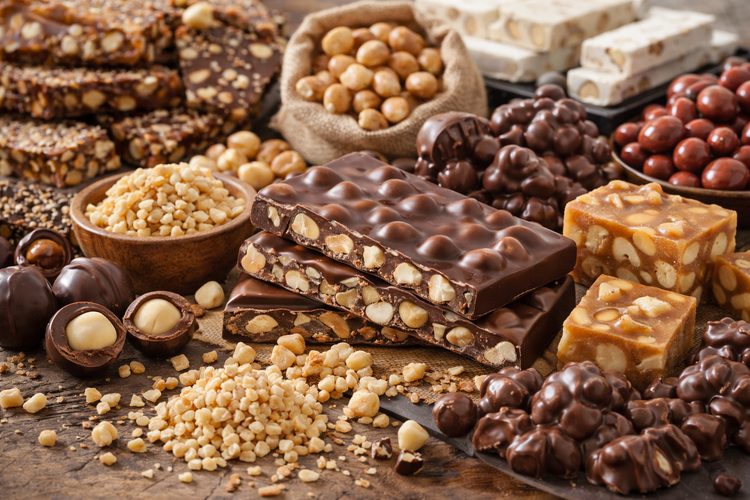
Macadamias occupy a premium position in confectionery because they combine a rich buttery flavor, a naturally smooth bite and a visual identity that immediately signals indulgence. In commercial terms, that premium only works when the nut format is aligned with the product architecture. A chocolate slab, praline filling, cookie inclusion, dragée center or enrobed cluster may all use macadamias, but they do not need the same cut size, roast level, bulk density, oil behavior or packing configuration. For Atlas, this category is less about buying “macadamias” in the abstract and more about defining what the ingredient must do on line and in the finished pack.
Confectionery buyers usually start with taste and visual appeal, but production teams quickly move the conversation toward piece control, breakage tolerance, deposit behavior, interaction with chocolate or sugar systems and the delivered cost of usable yield. A premium nut can become an expensive source of process variation if the specification is too broad. When macadamias are specified correctly, they can support higher perceived value, cleaner label positioning, stronger inclusion recognition and more consistent finished goods across trial runs and commercial scale production.
Why macadamias are used in confectionery
Macadamias are especially attractive in confectionery because they provide a creamy, rounded nut flavor without the sharper bitterness that can appear in some other nut categories under certain roasting conditions. That makes them useful in milk chocolate, white chocolate and caramel-centered concepts where the goal is richness rather than contrast. They also work well in dark chocolate when the product developer wants a premium inclusion that softens the overall sensory impression rather than competing with cocoa intensity.
From a textural standpoint, macadamias can deliver crunch without becoming overly hard if the correct size range and process route are selected. This matters in premium tablets, bark, clusters, chocolate-coated nut mixes, nougat, fudge, toffee, brittle, praline layers, inclusions for filled bars and bakery-confectionery crossover items. In many of these formats, the nut is expected to remain identifiable to the consumer while still being gentle enough for a pleasant bite. The ideal piece therefore depends on the balance between visual size, fracture pattern, coating coverage and bite resistance.
Commercial note: In confectionery, macadamias are often purchased not only for flavor contribution but also for their premium signaling effect. That means the visible piece size, color uniformity and surface cleanliness can influence merchandising value just as much as the raw ingredient cost.
How this topic shows up in real buying decisions
In real sourcing discussions, buyers typically compare whole kernels, halves, large pieces, medium diced styles, small granulation, meal, paste and butter-style processed formats. They may also compare raw versus roasted, or natural color versus more developed roast color, depending on whether the product will be enrobed, mixed into a confectionery mass, folded into caramel, deposited into a center or applied as a top decoration.
The wrong format can create operational issues. Pieces that are too large may bridge in feeders, fracture excessively during mixing or produce inconsistent piece count from bar to bar. Pieces that are too small can disappear visually, sink into fluid systems or cause the nut content to feel lower than intended even when the formula says otherwise. Roasting that is too light may leave the nut less expressive in a highly sweet base, while roasting that is too aggressive may shorten sensory tolerance in delicate white chocolate or vanilla systems. In other words, the buyer decision is really a combined flavor, processing and economics decision.
Common confectionery formats for macadamias
Whole kernels and large style halves are most relevant where the nut must be immediately visible and associated with a premium proposition. This is common in chocolate tablets with visible top-side inclusions, gift confectionery, premium boxed assortments, whole nut clusters and some dragée or enrobed formats. The advantage is strong visual impact. The tradeoff is lower piece count control, higher exposure to breakage during downstream handling and potentially higher cost per finished unit if the program requires a tight decorative appearance.
Large and medium pieces are often the practical choice for bars, bark, clusters, toffee, nougat, caramel inclusions and cookie-confectionery hybrids. This range can offer a useful middle ground: enough visibility for premium perception, but with better distribution and more manageable handling in production. Medium piece styles are frequently favored when the objective is an even inclusion pattern across the finished product rather than dramatic top-note decoration.
Small diced pieces and granulation are usually better for products where the nut needs to integrate into a mass, fill interstitial space, support machine flow or appear in high piece count applications. These formats are useful in praline fillings, panned applications, molded inclusions, compound coatings, confectionery spreads and some fillings where a coarse nut identity is desired but large visible pieces would disrupt depositor performance or bite quality.
Meal, paste and butter-style formats are important when the objective is flavor and body rather than visible identity. These can be used in fillings, gianduja-style systems, nut creams, confectionery bases, molded centers and sauces where macadamia character is wanted in a smooth or semi-smooth format. In such cases, buyers need to focus less on piece size and more on grind definition, fat release behavior, texture target, phase stability and how the ingredient will behave under shear and temperature in the final process.
Raw versus roasted: when the distinction matters
Many confectionery programs assume roasted nuts are always better, but that is not always true. Raw macadamias may be appropriate when the manufacturer intends to roast, caramelize, enrobe or further thermally process the nut in-house. This can give the producer more control over final flavor development and finished color. It may also prevent over-processing when the nut will go through multiple heat steps before packing.
Dry roasted macadamias are often preferred when the buyer wants a ready-to-use inclusion with more developed aroma and a cleaner application profile in chocolate or sugar confectionery. Dry roasting can help intensify nuttiness without introducing added oil from the roasting system. This is relevant where surface feel, adhesion characteristics or label positioning matter.
Oil roasted macadamias can have a distinct flavor and mouthfeel profile, but buyers need to think carefully about how that interacts with the rest of the confectionery system. In some applications, the extra richness can be desirable. In others, surface oil or the sensory profile may complicate coating behavior, packaging cleanliness or the intended finished product claim set. That is why the roast route should be discussed before quotation rather than assumed after sampling.
Piece planning is not only a quality issue
Piece planning is one of the most overlooked commercial decisions in this category. Buyers often request “macadamia pieces” without defining size tolerance, intended piece count, acceptable fines level or the type of finished product the pieces will enter. That creates room for mismatch between expectation and actual line performance. Confectionery operations generally benefit from specifying the target functional window rather than only a broad format name.
For example, a molded chocolate bar with top-decorated nut placement may need a larger visual range and tighter control over oversize fragments because the consumer sees the top surface first. A toffee slab broken into shards may tolerate a wider range if the nut distribution remains balanced and the eating quality stays premium. A praline or center filling may prioritize consistent smaller granulation so the depositor runs cleanly and the center texture stays controlled. These are different quote requests, even if each one uses “macadamias in confectionery.”
Technical points buyers should define early
Before requesting a firm quotation, confectionery teams should try to clarify the technical profile they need. Useful discussion points usually include whether the nut is a visible inclusion or an internal ingredient, the target nut presence per finished piece, the desired sensory profile, the acceptable color range, the tolerance for fines, the expected fracture behavior and whether the process subjects the nut to additional heating, tumbling, enrobing or depositing.
Other practical details can matter just as much. Does the line require gentle handling because appearance is critical? Will the nuts be mixed into fluid chocolate, folded into caramel or deposited into a semi-solid center? Is the buyer trying to avoid excessive dust or small particles that could affect mold definition or top-sheet appearance? Is the program export-focused, where longer logistics timelines and pack integrity become more important? A better quote generally comes from answering these questions at the beginning rather than after the first trial disappoints.
Specification thinking: The most useful briefs usually combine format, roast preference, application, piece size expectation, pack style, destination and forecast rhythm. This helps move the discussion from a generic nut inquiry to a more specification-minded commercial conversation.
Where macadamias fit across confectionery categories
Chocolate bars and tablets: Buyers usually focus on visible inclusion quality, piece integrity and contrast against the chocolate base. White and milk chocolate programs often emphasize clean buttery flavor, while dark chocolate concepts may use macadamias to add softness and richness to a more intense cocoa profile.
Bark and clusters: These products often allow more flexibility in shape, but still require sensible piece planning. Very large pieces may create uneven break points, while overly fine material can visually disappear. A well-selected medium piece can provide a balanced premium look with better consistency in finished breakage patterns.
Toffee, brittle and caramel confectionery: Here, the nut must withstand interaction with hot sugar systems and still deliver an appealing bite. Buyers often evaluate whether the chosen size creates pleasant chew resistance without becoming too hard or too sparse in the finished piece.
Nougat, praline and filled centers: These applications often require tighter attention to distribution and suspension. Large pieces may create depositor challenges or inconsistent cut surfaces, while smaller formats can provide more uniformity and better integration into the center matrix.
Panned and enrobed products: Shape, sizing consistency and surface behavior become more important when the nut is coated or repeatedly tumbled. The right product may depend on whether the nut is the center itself, part of a mixed center or an inclusion attached during enrobing.
Flavor profile, texture and finished product architecture
Macadamias are often selected because they support “luxury” flavor positioning, but that sensory profile has to fit the architecture of the confection. In white chocolate, the nut can reinforce cream and vanilla notes. In caramel applications, it can support buttery depth. In fruit-and-nut chocolates, it may soften acidity and help the product read as more indulgent. In dark chocolate, it can create a smoother, less angular eating experience compared with some harder, more assertive nut types.
Texture is just as important. Macadamias are not usually selected for aggressive crunch. They are selected for a richer, more refined bite. That means piece size should be chosen with the finished format in mind. Large pieces can signal abundance and value, but they can also make a product feel harder than intended. Smaller and mid-range pieces may create a more elegant bite and a more even nut distribution. The right choice depends on whether the brand is optimizing for showpiece appearance, line efficiency, bite comfort or cost control.
Color and appearance considerations
Confectionery buyers often care about flavor first, but appearance is a major driver of acceptance in premium nut programs. A natural cream-to-golden tone can look excellent against milk or dark chocolate, while more developed roast color may be desirable when the nut needs to appear toasted or artisanal. The acceptable color range should be discussed in context. A molded chocolate with exposed top-side decoration has different appearance demands than a filled praline where the nut is internal.
Surface cleanliness also matters. In visible applications, excessive fines or broken fragments can make a premium product look messy. In enclosed applications, that may matter less visually, but it can still affect processing and yield. Buyers who care deeply about appearance should say so before sampling and quotation, since visual expectations often influence the practical product option that makes sense to offer.
Manufacturing flow and handling implications
Macadamias are a premium ingredient, so yield loss from breakage, dust and inefficient handling can have an outsized cost effect. That is why production flow should be part of the sourcing conversation. The product may pass through receiving, temporary storage, internal transfer, mixing, depositing, forming, cooling, enrobing and final packing. At each stage, the nut can be subjected to vibration, drop height, augers, tumbling or compression.
If a buyer wants a high showpiece appearance, the plant may need gentler handling conditions or a format less prone to further breakage. If the process is more aggressive, a slightly smaller or more forgiving cut may actually deliver better usable yield at line speed. Atlas typically frames the conversation around what matters most: maximum visible impact, consistent piece count, lowest process loss, simplified machine behavior or a compromise between those objectives.
Packaging logic for confectionery macadamia programs
Packaging is not only a freight question. It can directly affect receiving efficiency, warehouse handling, hygiene expectations, partial-use convenience and product protection. Confectionery manufacturers often purchase in industrial bulk for line use, but the exact pack style depends on trial phase, volume scale and how frequently the ingredient is opened and consumed.
For trial quantities, buyers may prefer smaller and easier-to-handle units that reduce risk while allowing product development work to proceed. For validation runs and launch volumes, packaging usually shifts toward more efficient industrial formats that support line economics and routine replenishment. For export-oriented programs, the buyer may also need to consider longer transit windows, document alignment, palletization preferences and whether the product will enter repacking, co-manufacturing or direct factory use after arrival.
When the inquiry includes phrases like industrial bulk, retail-ready, private label, foodservice or export, the pack conversation changes immediately. Atlas usually recommends that buyers specify their preferred pack logic from the beginning because packaging assumptions can influence lead time, handling convenience and the realism of the price discussion.
Commercial planning: from sample to repeat program
Macadamia confectionery programs usually move through four recognizable stages: trial quantity, validation run, launch volume and repeat replenishment. Each stage should have a slightly different sourcing mindset.
During the trial stage, the priority is often sensory fit and process suitability. The buyer wants to confirm whether the nut format works in the intended confectionery system. At the validation stage, the focus shifts to repeatability, line behavior and initial commercial assumptions. At launch, piece size consistency, pack efficiency, shipment timing and broader supply planning become more important. Once the product reaches repeat replenishment, forecast rhythm, warehouse planning and delivered cost discipline matter more than sample-level perfection.
This is why Atlas prefers specification-minded quote requests over generic requests for a spot price. A supplier conversation is more productive when the buyer explains where the program is in its life cycle and what decision needs to be made next.
How confectionery buyers can control delivered cost
Macadamias are typically a premium-cost ingredient, so cost control depends less on chasing the lowest nominal price and more on matching the right specification to the actual use case. Several commercial mistakes can raise the true delivered cost: over-buying visual quality for an internal application, choosing a format that creates high breakage loss, specifying a roast style inconsistent with downstream heat exposure or using a pack configuration that adds unnecessary labor at the plant.
Cost can often be managed by asking more precise questions. Does the product really need large visible pieces, or would a balanced medium cut deliver similar consumer perception with better process performance? Does the plant need roasted product, or would raw product followed by in-house finishing be more rational? Is the buyer sourcing for a single premium SKU, or for a multi-market range where consistency across repeated shipments matters more than one perfect trial lot? These are the kinds of decisions that improve total program efficiency.
What Atlas would ask before quoting
For confectionery macadamia projects, Atlas usually structures the inquiry around a practical quote request. We would normally ask for the target format, application, roast preference, pack style, destination market and volume rhythm. We may also ask whether appearance, line performance or total delivered cost is the main priority, because the answer shapes which product direction is commercially sensible.
Typical questions include:
- Is the nut a visible top-side inclusion, an internal inclusion or a processed flavor-and-body ingredient?
- Do you need whole kernels, large pieces, medium pieces, small dice, meal, paste or butter?
- Should the product be raw, dry roasted or another finished style?
- Will the nut face further heat during chocolate making, caramel processing, baking or enrobing?
- What pack size works best for your receiving and line use?
- Is this a trial, validation run, launch program or ongoing monthly requirement?
- Is the finished product for domestic sale, export distribution, foodservice, retail or private label?
Typical confectionery uses for macadamias: premium chocolate bars, bark, clusters, pralines, toffee, caramel products, nougat, panned confectionery, filled centers, enrobed snacks and premium bakery-confectionery crossover items.
How this applies to domestic and export programs
The logic of this article works for both U.S. and export programs, but export adds planning layers. Buyers may need to think earlier about labeling language, import-side documentation, transit protection, pallet efficiency and whether the customer will use the product directly or repack it after arrival. A domestic program may be able to move faster with a simpler replenishment cadence, while export programs often benefit from clearer forecasting and firmer packaging assumptions.
That does not mean export is inherently more difficult. It simply means that product format and commercial timing need to be discussed together. A premium confectionery nut is easier to source when the commercial brief includes the destination market from the beginning.
Buyer mistakes that often slow down the process
One common mistake is asking for “the best macadamia pieces for chocolate” without defining whether the product is a tablet, bark, center, cluster or filling. Another is requesting samples that look impressive visually but are not aligned with how the plant actually runs. A third is ignoring pack style until the quotation stage, even though pack assumptions can change both handling practicality and commercial fit.
Buyers also sometimes overemphasize a unit price without checking how the chosen format affects usable yield, breakage loss and consistency in the finished piece. In premium confectionery, the cheapest line item is not always the lowest-cost solution once production reality is factored in.
Buyer planning note
Atlas Global Trading Co. uses academy topics like this to turn research-stage interest into more practical sourcing conversations. For macadamias in confectionery, the most productive next step is usually a concise commercial brief: tell us the confectionery format, whether the nut is visible or internal, the preferred roast style, your pack expectation, destination market and whether the need is for samples, a validation run or an ongoing program. That gives us a grounded basis for discussing realistic supply options through trusted California processing and trading relationships.
Practical quote request template
If you are preparing a confectionery inquiry, the following format tends to speed up the process:
- Product: macadamias for chocolate bar, bark, cluster, praline, toffee, filling or other confectionery use
- Format: whole, halves, large pieces, medium pieces, small dice, meal, paste or butter
- Style: raw, dry roasted or other required finish
- Application notes: visible inclusion, internal inclusion, center, decoration, deposit or blend
- Pack style: trial pack, industrial bulk, foodservice, retail-ready or export-oriented requirement
- Volume: sample quantity, validation run, monthly forecast or container program
- Destination: USA, Europe, Middle East, Asia or other target market
- Timing: needed-by date, launch window or repeat replenishment schedule
That level of detail usually produces a far more useful quotation conversation than a simple request for price on “macadamias for confectionery.”
Need help sourcing macadamias for confectionery?
Share the format, roast preference, pack style, trial or monthly volume and destination market so Atlas can frame the next step around a real commercial use case.
- State the exact macadamia format or target piece range
- Add the confectionery application and estimated volume
- Include pack style, destination market and required timing
Frequently Asked Questions
Which macadamia format is usually best for confectionery production?
The best format depends on the confectionery process. Whole kernels and larger styles are useful where premium visual impact matters, while medium and smaller diced cuts are often more practical where distribution, feeder behavior, piece count control and cleaner processing are priorities.
Should buyers request raw or roasted macadamias for confectionery programs?
It depends on the process sequence. Roasted product can deliver stronger ready-to-use flavor, while raw product may be more suitable when the manufacturer will roast, caramelize, bake, enrobe or otherwise expose the nut to further heat during production.
What should be included in a confectionery macadamia quote request?
A stronger quote request usually includes format, target piece size, roast preference, application, pack size, destination market, trial or monthly volume, needed-by timing and any priorities around appearance, line performance or total delivered cost.