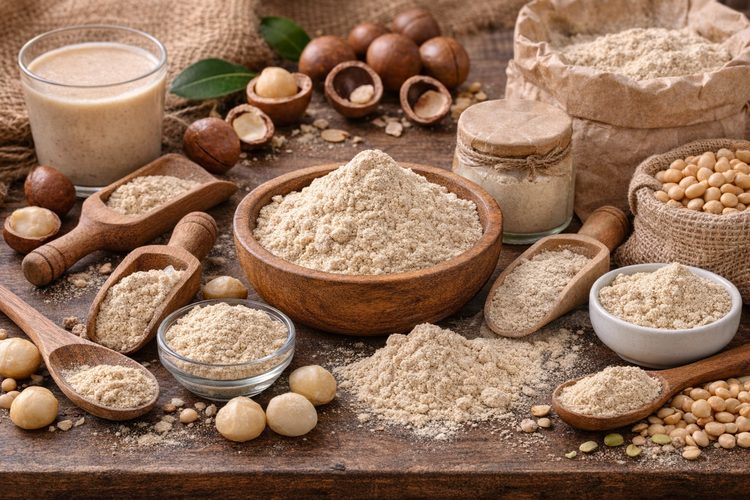
Defatted macadamia protein in functional formulas matters because industrial nut buying is rarely only about nominal price. The stronger commercial outcome usually comes from aligning specification, process route, functionality target, packaging and shipment timing before the order is placed. In specialty protein systems, that point becomes even more important because buyers are not only purchasing an ingredient. They are purchasing a performance profile that must fit a larger formula.
For customers developing high-value bakery systems, plant-based blends, specialty beverage bases, nutritional mixes, texture-managed products, protein-enriched dry blends or premium wellness-oriented foods, a defatted macadamia fraction can represent a different commercial route than whole-nut flour, full-fat meal or macadamia butter. The functional logic, the sensory logic and the cost logic all change once the ingredient is selected for protein role rather than for indulgent full-fat nut character alone.
Why defatted macadamia protein gets attention in formulation work
Whole macadamias are usually associated with richness, oil contribution and premium creamy flavor. A defatted or partially defatted protein-oriented format changes that profile. By reducing the fat fraction and increasing the relative concentration of non-oil solids, the ingredient can become more relevant in formulas where the customer wants better control over solids loading, oil contribution, mixability, protein positioning or finished texture.
Commercially, that matters because some buyers are not looking for a direct snack nut application. They are looking for a specialty functional ingredient that can help support premium positioning in formulations where every percentage point of fat, solids, flavor intensity and texture behavior affects the final result. In these cases, the raw material is being judged less like a commodity nut and more like a purposeful component in a designed system.
Defatted macadamia protein is usually not purchased for generic use. It is usually evaluated for a defined job inside a formula: contribute protein-oriented solids, reduce full-fat nut loading, support texture, bring premium nut identity, or fit a specific dry-blend or processing target.
How this topic shows up in real buying decisions
For macadamia-based specialty ingredients, the quote should reflect the real format and route. Whole kernel is different from meal, fine flour, defatted flour, protein-enriched fraction, butter or oil. The commercial logic also changes depending on whether the customer wants a high-function dry ingredient, a blend component, a protein story, a premium nut claim or a more controlled fat contribution in the finished product.
For macadamia buyers, the usable product menu may therefore extend beyond raw macadamias, pasteurized macadamias, dry roasted macadamias and oil roasted macadamias into more technical ingredient forms such as meal, extra fine flour, partially defatted flour, protein-oriented dry fractions and custom blend components. Which of those makes sense depends on whether the customer is manufacturing a dry mix, bar system, bakery base, beverage powder, plant-based formulation, nutritional product or specialty food ingredient program.
What “defatted macadamia protein” usually means commercially
In commercial terms, buyers often use phrases like defatted macadamia protein, protein flour, protein blend component or reduced-fat macadamia solids to describe a macadamia-derived ingredient intended for more technical use than full-fat meal. The exact specification can vary. Some customers may want a more concentrated protein-oriented dry fraction. Others may simply want a reduced-fat macadamia ingredient that behaves differently from standard full-fat flour.
The important point is that this category should be quoted based on the real intended role in the formula. A customer wanting a dry blend component for a protein-forward baked mix is not asking for the same thing as a customer wanting a premium nut note in a plant-based dairy system. Those are different commercial briefs even if the ingredient family overlaps.
Functional role in dry blends and protein-oriented systems
Defatted macadamia protein can become relevant when the customer needs a drier, more solids-focused ingredient than whole-macadamia flour would normally provide. In dry blends, that may help with powder handling, controlled fat contribution and protein-positioning logic. In protein-oriented formulas, it may support a more layered ingredient story when blended with other plant proteins, nut solids or functional dry materials.
From a buyer’s perspective, this means the ingredient should be discussed not just in terms of source but in terms of job. Is it being used to boost the protein narrative? Modify texture? Lower oil contribution versus whole-nut alternatives? Provide a premium nut-based differentiator inside a broader protein system? The answer affects sourcing feasibility, pack selection and the likely quote structure.
How it differs from full-fat macadamia flour or meal
Full-fat macadamia flour or meal usually brings more richness, more oil contribution and a stronger link to indulgent texture. Defatted or protein-oriented macadamia ingredients may behave differently because the oil balance changes. That may alter mouthfeel, hydration pattern, dry mix behavior, density and how the ingredient performs when blended with starches, fibers, sweeteners or other protein sources.
This difference is commercially important because a buyer should not expect the two formats to behave identically. A full-fat flour may be better when richness and nut character are the lead priorities. A defatted protein-oriented format may be more suitable where the customer wants controlled fat input, a more technical dry ingredient profile or better fit inside a structured functional formula.
Potential application areas
Depending on the real specification and processing route, a defatted macadamia protein-style ingredient may be relevant in several premium or specialty categories. These can include protein-forward bakery mixes, specialty snack systems, nutritional blends, plant-based dry mixes, premium wellness-oriented powders, textured dry inclusions, nutrient-positioned formulations, reduced-fat nut-based systems and custom blend platforms where macadamia helps differentiate the finished formula.
The buyer should still be precise. A beverage powder, a bar mix, a bakery premix and a spoonable blend base do not ask the same things from the ingredient. The more exact the application is, the easier it becomes to quote intelligently.
Texture and mouthfeel considerations
Even in protein-oriented systems, texture remains central. Defatted macadamia protein will usually not contribute the same creamy richness as a full-fat butter or meal. That can be an advantage or a limitation depending on the formula. In a dry mix or protein blend, less oil may improve handling and reduce unwanted richness. In a finished nutritional or bakery system, the loss of full-fat mouthfeel may need to be compensated through broader formula design.
That is why Atlas would typically ask whether the customer values cleaner dry handling, lower fat contribution, better blending logic or finished sensory richness. The ingredient choice depends on which of those matters most in the final commercial product.
Protein blending logic
In many commercial formulas, a macadamia-derived protein ingredient is unlikely to be used alone. More often, it may be blended with other plant proteins, nut solids, cereal bases, fibers, sweeteners or functional carriers. This is often the most practical commercial route because it lets the customer use macadamia as a premium differentiator while tuning total cost, functionality and sensory outcome with other ingredients.
For this reason, buyers should state whether macadamia protein is intended to be a lead hero ingredient, a supporting premium note, or one component in a broader composite formula. That distinction materially affects what kind of ingredient specification is commercially sensible.
Flavor profile and sensory positioning
A protein-oriented macadamia ingredient can still have sensory importance. Even if the application is more technical than indulgent, the customer may still care whether the ingredient contributes a mild nut note, a neutral background, or a more obvious premium identity. Some formulas need macadamia to stay quiet and functional. Others need it to help justify a premium or clean-plant story on label and in marketing.
The flavor goal therefore belongs in the quote request. A customer seeking a largely neutral structural ingredient may need a different route than one seeking both functionality and recognizable macadamia character.
Particle size and physical format
Particle size often becomes more important in functional ingredient programs than in simpler commodity nut buying. A coarse dry fraction may behave differently in blending, hydration and finished texture than a finer milled format. Some customers need a free-flowing powder-style ingredient. Others may want a slightly more textured system for bakery or specialty food use. Without that detail, quotations can become too generic to be useful.
Atlas would usually encourage buyers to define whether the target is flour-like, powder-like, fine meal or custom blend grade. That clarification helps connect the ingredient to its actual process role.
Packaging and handling requirements
Packaging matters because technical dry ingredients are often handled differently from snack nuts or nut butters. A customer using defatted macadamia protein in manufacturing may prioritize industrial bulk efficiency, lot traceability and controlled storage. A smaller-scale brand may need more manageable pack sizes for staged production. An export-oriented program may require different case logic and documentation readiness.
This is why the buyer should say whether the program is industrial bulk, foodservice-oriented ingredient use, retail-ready finished blend, private label or export-oriented. That single clarification often changes packaging assumptions, handling expectations and the total commercial structure of the inquiry.
Storage and stability logic
Although reduced-fat or protein-oriented formats may behave differently from full-fat nut systems, storage planning still matters. The buyer should think about storage duration, warehouse conditions, how quickly opened packs are consumed, and whether the ingredient moves through domestic or export routes. A dry specialty ingredient still needs to fit real operational conditions, not only a technical specification sheet.
Programs that perform well commercially usually do so because the buyer matches ingredient choice to realistic production rhythm. Trial quantity, validation run, launch volume and repeat replenishment remain useful planning stages here too.
What Atlas would ask before quoting
Atlas encourages buyers to define intended use, pack style, destination, timeline and quality expectations early. For defatted macadamia protein inquiries, Atlas would also usually ask more technical questions: Is the ingredient intended for a dry blend, bakery system, beverage base or specialty formula? Is the goal protein positioning, lower oil contribution, improved dry handling or premium differentiation? Does the customer need a flour-like format, a powder-like format or a custom blend component? These details help reduce avoidable back-and-forth and improve comparability across supply options.
In practical terms, the quote request works best when it includes target format, application, pack style, destination market and volume rhythm, along with a short note on the functional role inside the formula. That one addition often turns a broad inquiry into a quote-worthy technical-commercial discussion.
Commercial planning points
From a trading standpoint, the best specialty ingredient programs are built around repeatability. That means clear documentation, agreed packaging, sensible shipment cadence and a commercial structure that supports continuity rather than one-off emergency buying. In functional formulas, it also means the ingredient has to work consistently enough that the buyer can scale without reformulating every batch.
When relevant, the brief should mention whether the program is industrial bulk, foodservice, retail-ready, private label or export-oriented. It should also indicate whether the product is in early concept stage, validation run, launch volume or repeat replenishment. Those points can materially change the way the inquiry should be structured.
Buyer planning note
Atlas Global Trading Co. uses topics like this to move conversations from broad ingredient interest to a specification-minded inquiry. Defatted macadamia protein in functional formulas is not a generic category request. It is a targeted sourcing question tied to the real role the ingredient must play inside a finished system.
If you are evaluating a macadamia-derived protein or reduced-fat nut ingredient for dry blends, premium formulations, bakery systems, plant-based development or specialty technical use, share the target format, application, pack style, estimated volume and destination using the floating contact form so the next step can be grounded in a real commercial need.
Need help sourcing a macadamia-derived protein or reduced-fat functional ingredient?
Use the contact form to turn this topic into a practical quote request with format, functional role, packaging and shipment timing defined together.
- State the target protein or reduced-fat macadamia format
- Add application, functional role and target monthly or trial volume
- Include destination market, pack style and timing requirements
Frequently Asked Questions
What should buyers specify first when evaluating defatted macadamia protein?
Buyers should define the target application, protein role, particle size, residual fat expectations, packaging format, destination market and production volume. Defatted macadamia protein is most useful when the functional brief is clear before quoting.
Why would a formulator use defatted macadamia protein instead of whole-macadamia flour or butter?
Defatted protein-oriented formats may make more sense when the customer wants less oil contribution, higher solids concentration, a different functional balance and more flexibility in protein-forward or texture-managed formulas.
Can defatted macadamia protein be used in both domestic and export programs?
Yes. The same ingredient logic can apply to domestic, foodservice, industrial, private-label and export-oriented programs, although pack style, shelf-life planning, labeling and documentation may differ by destination.