Target bakery use
State whether the ingredient is for cookies, brownies, cakes, loaves, mixes, crusts or bars. The application changes the ideal grind and process discussion.
Practical guidance on walnut meal functionality, bakery formulation logic, specification writing and buying decisions for gluten-free and specialty baking programs.
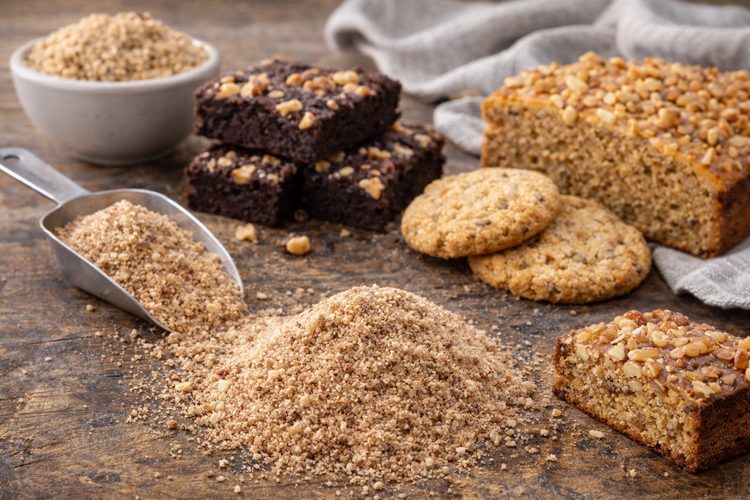
Walnut meal is one of the more commercially interesting walnut formats because it sits between ingredient functionality and sensory value. It is not purchased primarily for whole-kernel appearance. It is purchased because it can change crumb character, nut flavor expression, oil contribution, particulate distribution and perceived richness in the finished baked good. In gluten-free and specialty baking, that matters because the bakery system is already compensating for the absence or reduction of conventional wheat structure, and every dry ingredient has a more visible effect on handling and finished quality.
For buyers, that means walnut meal should not be treated as a generic secondary by-product. It is a working ingredient. The right particle profile, process condition, pack style and shipment timing can make the difference between a formulation aid and a source of inconsistency. Atlas approaches this category by asking what the walnut meal needs to do in the formula and on the line: contribute flavor, soften texture, increase nutritional appeal, reduce visible particle size, support label positioning or replace part of another dry ingredient system without creating avoidable process disruption.
Gluten-free and specialty bakery formulas often depend on a carefully managed balance of starches, proteins, hydrocolloids, fibers, eggs, oils and nut ingredients. Walnut meal can contribute body, nut character and fat in a way that is different from intact pieces or coarser chopped walnuts. Because it is more finely reduced, it distributes more evenly through the batter or dough matrix and can help create a more integrated eating experience rather than a simple visible inclusion effect.
In practical buyer terms, walnut meal is relevant in products such as gluten-free cookies, brownies, loaf cakes, tea cakes, bar systems, tart bases, specialty crusts, filled bakery applications, bakery mixes and premium wellness-positioned baked goods. It can also matter in reduced-flour, grain-free, paleo-style, keto-adjacent or otherwise specialty-positioned bakery programs where nut-based ingredients are used to help define both texture and label story.
The commercial value of walnut meal increases when a buyer is trying to achieve one or more of the following: a softer bite, deeper nut flavor, reduced visible chunkiness, more even particulate distribution, a denser premium-style crumb, a more differentiated ingredient statement or a formula structure that benefits from the presence of natural nut solids and oils.
In trade language, walnut meal usually refers to finely reduced walnut material that is smaller than typical pieces and is intended for blending into formulations rather than showcasing full kernel identity. That sounds simple, but the actual commercial discussion can vary meaningfully. One buyer may want a relatively coarse meal with more visible particulate character. Another may want a finer, more flour-like texture for smoother incorporation. A third may want a meal that still retains enough particulate presence to contribute bakery identity without functioning like a fully milled powder.
That is why “walnut meal” alone is not always enough as a purchase description. The stronger inquiry specifies the intended end use and the preferred particle profile. Even if the language remains commercial rather than laboratory-style, the supplier should be able to understand whether the material is expected to behave more like a fine bakery inclusion, a nut flour substitute, a filling base ingredient or a flavor-and-fat contributor inside a broader dry mix.
Buyers comparing walnut meal with other walnut formats usually weigh several factors at the same time:
Those choices are not interchangeable. A buyer developing gluten-free brownies may prefer walnut meal because it supports a moist, rich bite without large nut fragments. A premium cookie brand may combine walnut meal in the base with selected walnut pieces on top for a layered texture effect. A specialty baking mix producer may use meal where larger particles would segregate or create inconsistent scoop-to-scoop distribution.
Walnut meal can affect a formula in several ways at once. First, it contributes oil naturally present in the nut, which can support richness and influence tenderness. Second, it introduces nut solids that change the balance of dry matter in the system. Third, it adds flavor in a distributed way because the reduced particle size allows nut character to appear throughout the bite rather than only in isolated inclusion points.
In gluten-free systems, this can be especially useful because the base formula may otherwise rely heavily on starches or neutral flours that need support from more characterful ingredients. Walnut meal can help move the product toward a more premium sensory profile. It may also support darker crumb tone, which can be an advantage in brownies, chocolate bakery, spice bakery, date-based bars and other formats where a warm, rich appearance is desirable.
At the same time, walnut meal is not just a flavor addition. Its oil content means formulators should think about how it interacts with added fats, water activity, shelf-life planning and packaging protection. The same ingredient that improves richness can also require more careful freshness and storage discipline than a plain starch-based component.
For bakery procurement teams and product developers, the most useful early questions are not only “Can you quote walnut meal?” but also:
These questions matter because particle size, process condition and packaging choice all flow from them. A meal that is acceptable in a short-run premium bakery may not be ideal in a longer-chain export mix business. A raw walnut meal that works in one soft-baked format may not be the preferred choice in a product that depends on a more pronounced toasted nut note.
Technical-commercial note: buyers should avoid treating “meal,” “flour” and “fine ground” as interchangeable terms unless the supplier and the bakery team have aligned on expected particle behavior. Small differences in grind profile can materially change batter viscosity, visual texture and perceived richness.
Particle size is one of the most important parts of the walnut meal brief. In bakery systems, it affects blendability, water interaction, visible specking, finished crumb and depositor behavior. A finer meal may incorporate more evenly and create a more uniform product, but it can also change the feel of the base formula more dramatically. A coarser meal may preserve more particulate bakery identity but could also produce more visible variation or less consistent distribution.
From a sourcing perspective, buyers should think in terms of functionality rather than only terminology. If a product needs a smooth brownie matrix, a finer profile may be the better target. If the bakery wants a rustic cookie or artisan loaf with visible walnut character but not large pieces, a coarser meal may make more sense. The point is not to specify laboratory data for its own sake. The point is to make sure the ingredient behaves correctly in the finished commercial system.
Raw walnut meal is often relevant when the bakery wants to preserve flexibility, keep the process simple or build flavor in-house through the baking cycle. Roasted walnut meal may be appropriate where the buyer wants a more immediate and pronounced nut note, especially in systems where bake development alone may not create enough flavor intensity.
However, roasted material changes more than taste. It may affect color, aroma expression, brittleness during handling and perceived dryness in some applications. In certain specialty bakery formats, a raw meal can integrate more gently into the formula, while a roasted meal can create a more assertive signature. That decision should be made in the context of the target product, not by general preference alone.
Cookies and soft-baked biscuits: walnut meal can support richer bite, visible nut specking, softer texture and a more premium ingredient story, especially when combined with selected larger pieces for top-note texture.
Brownies and bars: it can contribute density, richness and deeper nut flavor without introducing oversized inclusions that interfere with cutting or bite uniformity.
Cakes and tea loaves: it can help develop a more moist and tender eating experience, particularly in gluten-free systems that risk becoming dry or crumbly.
Tart bases and crust systems: walnut meal can add flavor, color and character to short or crumb-style applications where nut solids are part of the premium positioning.
Dry baking mixes: it can be used where the buyer wants a differentiated mix format, though particle stability, oxidative risk and pack protection become more important.
Specialty wellness-positioned bakery: it can support grain-reduced, protein-emphasized or nut-forward narratives when handled with clear allergen and application logic.
Buyers rarely purchase walnut meal in isolation from the rest of the formula story. They usually compare it against other dry ingredient options, other nut meals, coarser walnut cuts or blended nut systems. The decision often comes down to the following trade-offs:
That is why the best commercial results usually come when the product development and procurement teams align early. A walnut meal that performs well technically but does not fit the target cost model may still be the wrong ingredient. Likewise, a low-cost meal that technically fits the description may still fail if the product needs cleaner flavor, tighter grind behavior or better handling consistency.
From a functional standpoint, walnut meal may contribute softness, density, flavor persistence, particulate character and perceived indulgence. In gluten-free formulas, where structure is often rebuilt through non-wheat systems, that contribution can be more noticeable than it would be in a conventional wheat bakery product.
Walnut meal may also help reduce the sensory gap between “special diet” positioning and “premium bakery” experience. Many specialty bakery products fail not because the label positioning is weak, but because the eating quality feels compromised. Nut-based ingredients can help close that gap when the formulation is balanced correctly.
Commercially, this matters because buyers are not only purchasing ingredients. They are purchasing finished product credibility. If walnut meal helps the finished bakery item taste richer, feel less dry and read as more premium, it may justify a stronger ingredient cost than a simpler filler-type component.
Because walnut meal has a reduced particle size, surface area and oil exposure matter. This has direct implications for freshness management, storage conditions and shipment planning. A buyer should think about walnut meal not only as a bakery input but also as an oil-bearing ingredient that needs sensible packaging and stock rotation.
Long storage, repeated warm exposure, poor warehouse conditions or extended transit can undermine product quality before the ingredient ever reaches the line. This is especially relevant for export programs or for brands that hold inventory for longer periods. The tighter the freshness expectations and the longer the commercial chain, the more important it becomes to define packaging, storage conditions and realistic replenishment cadence.
For many buyers, the correct commercial answer is not to maximize order size blindly, but to align order frequency with production rhythm and shelf-life expectations. That can be more valuable than negotiating nominal price on an oversized shipment that sits too long in suboptimal conditions.
Atlas generally encourages buyers to translate the bakery concept into a quote request that includes:
Those points help turn a concept-stage inquiry into something commercially actionable. They also reduce the risk of comparing non-equivalent offers from different California partner routes.
Typical use cases for walnuts on this website include bakery, confectionery, sauces and fillings, snacks and granola. For walnut meal, the strongest inquiry usually identifies the exact bakery format and whether the ingredient is intended to replace part of a flour system, support texture or simply build nut flavor more evenly through the formula.
For walnut meal, a practical specification discussion may include particle-size expectation, visual appearance, raw or roasted condition, flavor profile, packaging format, destination, allergen handling expectations and any internal bakery performance notes that matter. The buyer does not need to over-engineer the brief, but “walnut meal for bakery” is often too broad for an efficient quotation process.
A stronger commercial request might sound like this: “Please quote California walnut meal for gluten-free brownie production, raw or roasted comparison welcome, medium-fine bakery grind, industrial bulk pack, initial trial plus expected monthly volume after validation, destination EU, target shipment window Q4.” That level of clarity gives the supplier enough direction to quote more realistically.
Packaging matters more for walnut meal than some buyers first expect. Because the ingredient is reduced and oil-bearing, protective handling is important. Bulk industrial packs may be appropriate for larger manufacturing operations with fast internal turnover. Smaller foodservice or specialty manufacturing packs may suit buyers that open and use material in shorter intervals. Retail-ready or private label routes create a different conversation entirely because the pack becomes part of the finished commercial offer rather than only an internal handling format.
Export programs add another layer of care. Documentation, palletization, transit duration, container planning and destination climate all become relevant. The buyer should mention early whether the program is industrial bulk, foodservice, retail-ready, private label or export-oriented because that single clarification often changes how the offer should be structured.
From a trading standpoint, walnut meal programs are often best developed in stages rather than in one jump. Atlas typically sees the commercial flow as:
This approach is especially useful in gluten-free and specialty bakery because reformulation costs can be high and the ingredient system is often less forgiving than standard commodity bakery formulas. A slightly different meal behavior can create measurable changes in water uptake, texture or line performance, so validation should be taken seriously.
One of the most common buying mistakes is to compare walnut meal only by price per kilogram. That can overlook differences in grind profile, sensory quality, oil freshness, pack practicality and application fit. A cheaper meal that behaves unpredictably in a bakery line may end up costing more once rejects, rework, slower scaling or quality complaints are considered.
Another common issue is using a bakery concept description in place of a sourcing description. Saying “we need something for a premium gluten-free cookie” does not yet tell the supplier whether the bakery needs fine meal, flour-like dispersion, raw or roasted character, industrial pack or private label format. The clearer the commercial brief, the more meaningful the price comparison becomes.
Walnut meal is relevant to several buyer types: gluten-free bakery manufacturers, specialty baking mix brands, premium cookie and brownie producers, foodservice dessert manufacturers, private label bakery developers, artisanal brands scaling toward industrial supply and export-focused brands that want California nut ingredient positioning in their finished products.
These buyers do not all need the same specification. A mix brand may care more about stable fine distribution and dry blend performance. A fresh bakery may care more about flavor and indulgent crumb. An export brand may care more about protective packing and transit considerations. That is why a good walnut meal quote starts with end use rather than with a generic ingredient label alone.
Atlas Global Trading Co. uses topics like this to move conversations from product ideas to specification-minded sourcing discussions. For walnut meal, the most useful next step is to share the target application, expected particle behavior, pack style, estimated volume and destination market. That lets Atlas evaluate California partner options in a way that reflects the real bakery requirement rather than a generic commodity assumption.
If you are building a gluten-free or specialty baking program, Use the contact form to describe what the walnut meal must do in the finished product. That makes it easier to discuss the right format, pack and commercial structure from the start.
State whether the ingredient is for cookies, brownies, cakes, loaves, mixes, crusts or bars. The application changes the ideal grind and process discussion.
Clarify whether you need fine meal, medium-fine meal or a more textured particulate style. This is often the difference between a workable quote and a vague one.
Indicate whether raw or roasted walnut character is preferred and whether the bakery will build flavor further during processing.
Say whether the program is industrial bulk, foodservice, retail-ready, private label or export-oriented because that affects pack and logistics planning.
Distinguish sample needs from trial quantities, validation runs and ongoing monthly demand so supplier options can be framed realistically.
Use the contact form to turn this research topic into a practical quote request for Atlas. Include application, grind expectation, pack style, volume rhythm and destination so the next discussion starts with a commercially useful specification.
Walnut meal is used when formulators want nut flavor, oil contribution, fine particulate distribution and a softer, more integrated bakery texture rather than visible whole-kernel identity. It can support richer flavor delivery and more even incorporation in specialty formulas.
A stronger request defines particle-size expectation, raw or roasted condition, intended bakery application, packaging style, destination market, trial or monthly volume and any freshness or shelf-life expectations that matter commercially.
Not always. In commercial use, walnut meal and walnut flour may be used differently depending on grind profile and intended function. Buyers should align on expected particle behavior rather than relying only on the name.
Yes. Atlas uses the same application, specification, packaging and shipment logic covered in the academy to build more practical walnut meal sourcing discussions for domestic and export buyers.
Yes. The same product-form and application logic applies to domestic and export programs, although packaging, documentation, lead times and storage planning may vary by destination market.